- ■
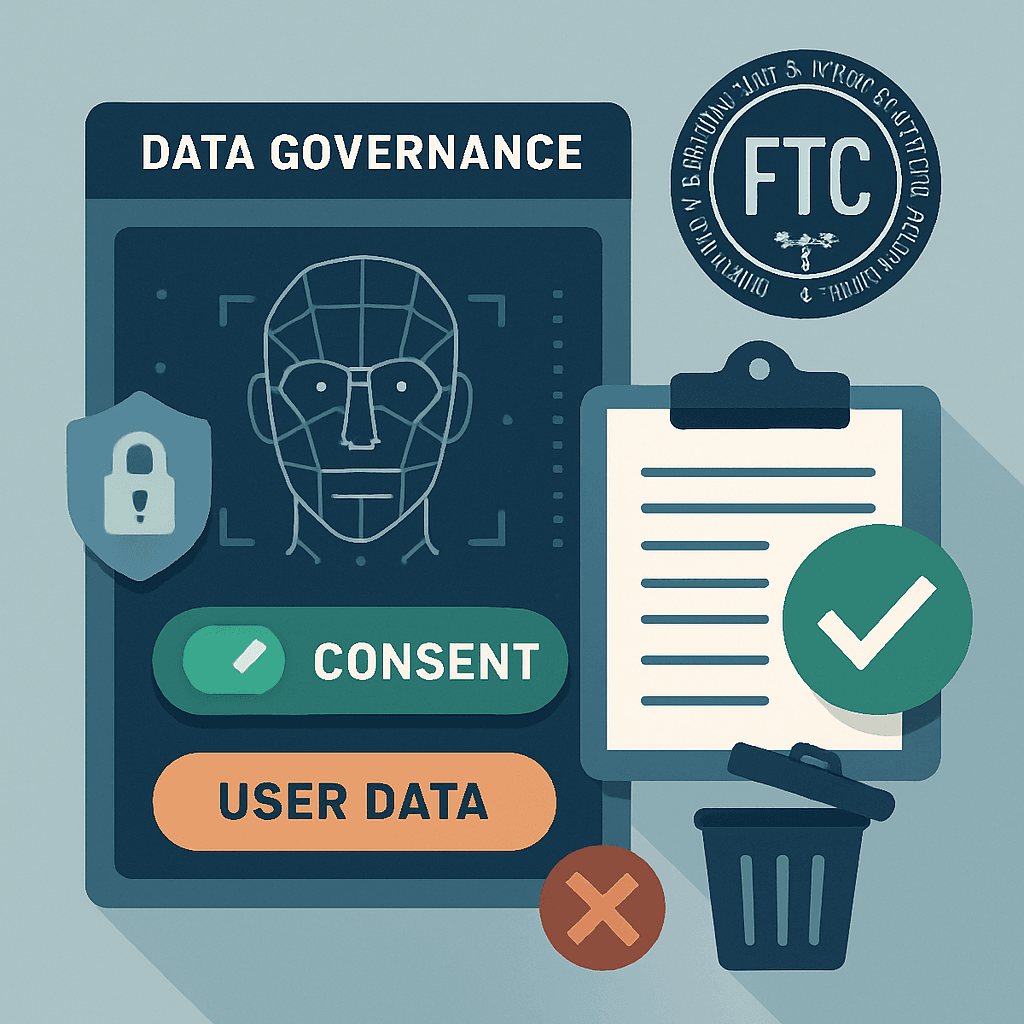
FTC settlement forces deletion of 3 million dating app photos used to train facial recognition AI without user consent
- ■
OkCupid executives' undisclosed investment in Clarifai created conflict-of-interest in 2014 data transfer
- ■
Enforcement establishes retroactive liability for AI training data acquired before consent frameworks existed
- ■
Builders using consumer biometric data face 12-18 month compliance window before regulatory requirements become mandatory
Clarifai just deleted 3 million OkCupid profile photos under FTC settlement, marking the moment AI training data crosses from permissionless harvesting to regulated consent frameworks. The enforcement targets a 2014 data transfer where OkCupid executives—who had invested in Clarifai—provided user photos for facial recognition training without disclosure. This isn't historical cleanup. It's prospective regulatory precedent establishing that retroactive biometric data acquisition violates consumer protection law, with immediate compliance implications for anyone building on consumer-sourced training data.
The numbers tell the inflection story: 3 million faces, harvested in 2014, deleted in 2026. Clarifai completed the data purge following an FTC settlement that reaches back twelve years to establish something unprecedented—regulatory accountability for AI training data acquired before modern consent frameworks existed.
The mechanics matter here. In 2014, OkCupid transferred millions of user profile photos to Clarifai for facial recognition training. Nothing unusual in that era's data-sharing practices, except for one detail buried in court documents: OkCupid executives had invested in Clarifai. That undisclosed conflict-of-interest transformed a routine data partnership into what the FTC now characterizes as deceptive consumer practice.
Match Group, which acquired OkCupid in 2011, inherited the liability. The settlement doesn't just mandate deletion. It establishes precedent that retroactive consent violations create enforceable claims, even when the original data transfer predated current regulatory frameworks. That's the transition point—from "we didn't know better then" to "you should have known."
The 2014 context is critical. Facebook's facial recognition practices hadn't yet triggered the $550 million Illinois settlement. GDPR didn't exist. Biometric privacy laws existed in exactly three states. The AI training data ecosystem operated under a permissionless model—if you had user data and terms of service mentioning "partners," you could share it.
Clarifai built its facial recognition capabilities during this window. The company's models learned to detect faces, identify features, and classify images using millions of real dating app photos. Users uploading profile pictures in 2014 had no reasonable expectation those images would train commercial AI systems. The OkCupid terms of service technically allowed data sharing with partners, but the executive investment relationship remained undisclosed.
That's where the FTC found its angle. Not just the data transfer, but the failure to disclose the financial relationship that motivated it. Court documents reveal OkCupid executives stood to benefit financially from Clarifai's growth—growth directly tied to the quality of its training data. The photos weren't just shared with a partner. They represented a de facto data-for-equity arrangement that users never consented to.
The enforcement timeline shows the shift. FTC initiated investigation in 2023, nine years after the original transfer. Settlement finalized in 2026, requiring not just deletion but verification—Clarifai must prove the data is gone and stayed gone. That verification requirement matters for anyone building AI models on consumer data today. The regulatory window for claiming ignorance just closed.
For facial recognition specifically, this follows a pattern. Clearview AI faced similar scrutiny for scraping public photos. Amazon paused police use of Rekognition. Microsoft retired public face databases. Each enforcement action chips away at the permissionless data harvesting model that built the first generation of biometric AI.
But the Clarifai settlement extends beyond facial recognition. The FTC's theory—that undisclosed financial relationships invalidate data sharing consent—applies to any consumer application feeding AI training pipelines. Health apps sharing data with AI startups their executives invested in. Fitness trackers licensing movement data to companies where employees hold equity. Education platforms transferring student interaction data to affiliated AI labs.
The investor conflict-of-interest precedent creates immediate compliance risks. Startups commonly structure data partnerships with equity components. An AI company might provide free API access in exchange for training data and a small equity stake. Under the Clarifai precedent, that arrangement requires explicit user disclosure—not buried in terms of service, but clear notification that their data feeds a system their platform's leadership financially benefits from.
Regulatory velocity matters here. State biometric privacy laws now cover Illinois, Texas, Washington, California, and New York. Each has different consent requirements, but the trend points one direction—toward opt-in frameworks requiring specific, informed consent for biometric data use. The Clarifai settlement accelerates that transition by establishing federal enforcement authority over retroactive violations.
For enterprises already operating facial recognition systems, the compliance window is narrowing. Gartner's regulatory adoption model suggests 18 months from initial enforcement to mandatory compliance frameworks. That puts the deadline around Q4 2027 for companies to audit training data provenance, verify consent chains, and document deletion of questionable datasets.
The technical implications extend beyond deletion. Modern AI models retain training data characteristics even after source data is removed. Facial recognition systems trained on OkCupid photos learned patterns specific to dating app photography—favorable angles, good lighting, age demographics skewed young. Deleting the training images doesn't erase those learned patterns. The FTC settlement doesn't address model retraining, creating uncertainty about whether deletion alone satisfies compliance.
Watch the next threshold carefully. If the FTC extends enforcement to require model retraining—not just data deletion—the compliance cost multiplies exponentially. Training state-of-the-art facial recognition models costs millions in compute. Retraining every model touched by improperly sourced data could restructure the entire biometric AI industry.
Clarifai operates in a market where training data provenance now carries regulatory risk. The company's facial recognition capabilities compete against Amazon Rekognition, Google Cloud Vision, and Microsoft Azure Face—all of which have tightened data sourcing policies following similar regulatory pressure. The competitive advantage once gained through aggressive data acquisition now converts to compliance liability.
The Clarifai settlement shifts AI training data from technical decision to compliance obligation. Builders have 12-18 months to audit data provenance before consent frameworks become mandatory—start with biometric data, but assume the precedent extends to all consumer-sourced training datasets. Investors evaluating AI companies should scrutinize training data sourcing and executive conflicts-of-interest that create FTC exposure. Decision-makers deploying facial recognition must verify vendor compliance with consent requirements, not just technical performance. The next enforcement wave will target companies still operating under permissionless data models. Document your consent chains now, or plan for mandatory deletion later.